The Forest That Remembers
Every tree keeps a chronicle of droughts, frosts, fires and good years. You only have to learn to read it, layer by layer.
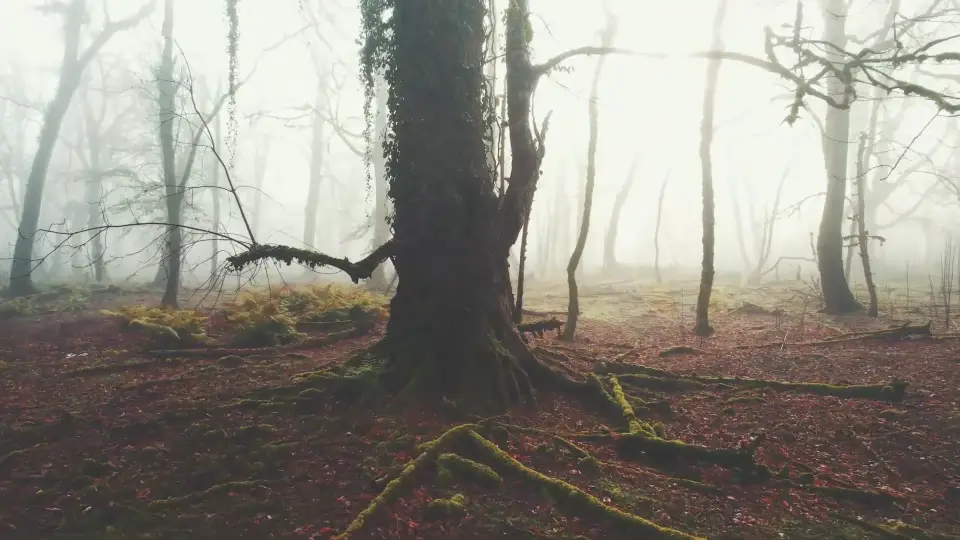
In November the forest stops pretending. The leaves are already on the ground, light passes straight through the crowns, and mist fills the space between trunks so that each tree stands apart, like a word in a sentence. It is a good time to ask the forest what it remembers.
Because the forest does remember. Not in a human sense, not in pictures, but in a more literal way: it records. Every year leaves a trace in the wood, and those traces add up to a chronicle longer than any parish archive. The oldest trees in Europe1 The Bosnian pine known as “Adonis” in Greece is over 1,075 years old; Poland’s oldest oaks are several centuries old. began keeping it before the first universities were founded.
Rings
The simplest record is the rings. In spring a tree grows fast and builds pale, wide cells. In summer it slows down and the wood becomes darker and denser. A cross-section of the trunk shows rings: one for every year. A wide one means a good year, with a wet spring and a warm summer. A narrow one means drought, frost, or a year when something ate the leaves.
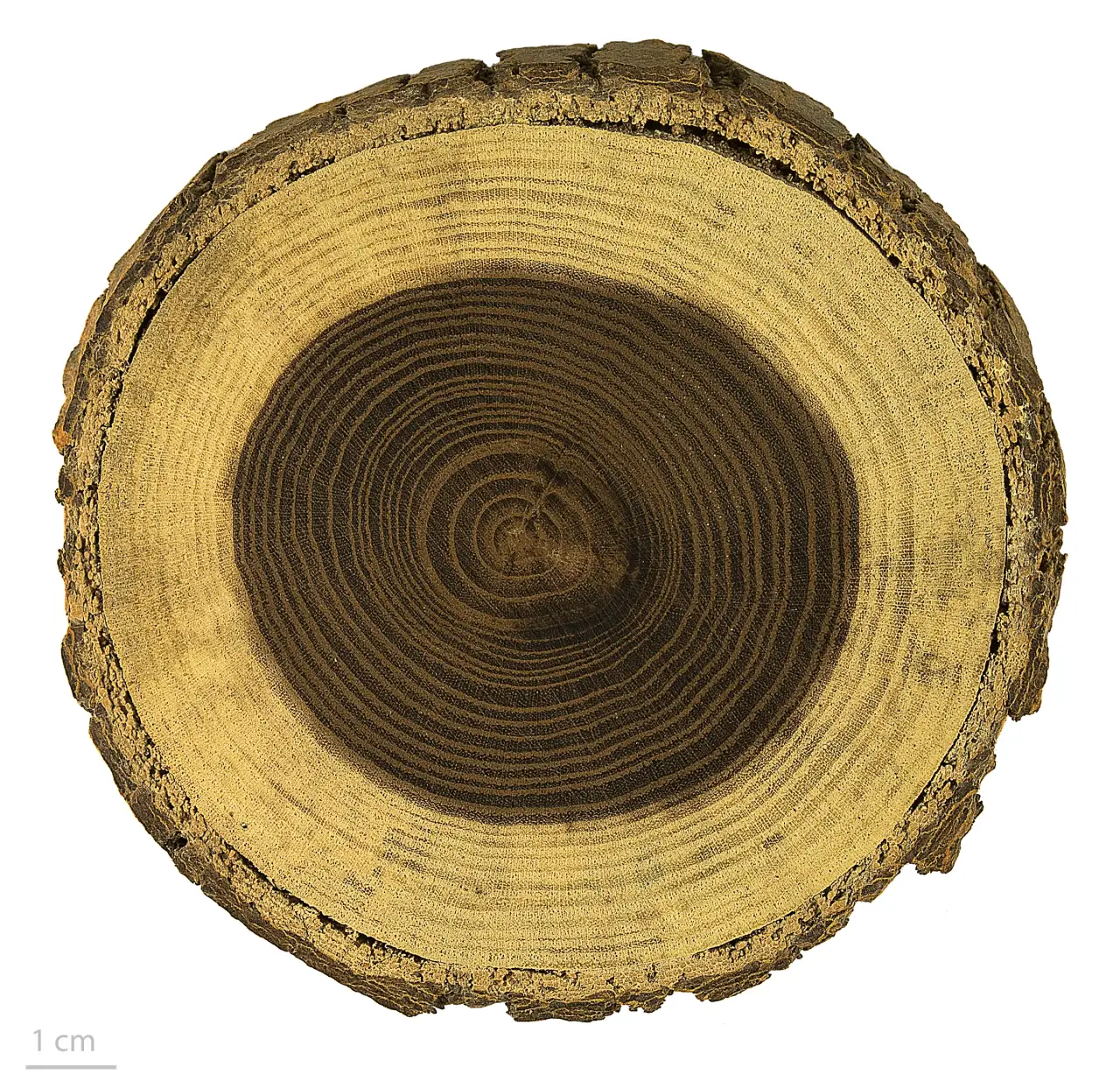
Layer I · Rings
Pale spring wood, dark summer wood. The width of a ring is a whole year’s weather written in millimetres. Dendrochronologists can read droughts from centuries ago in it.
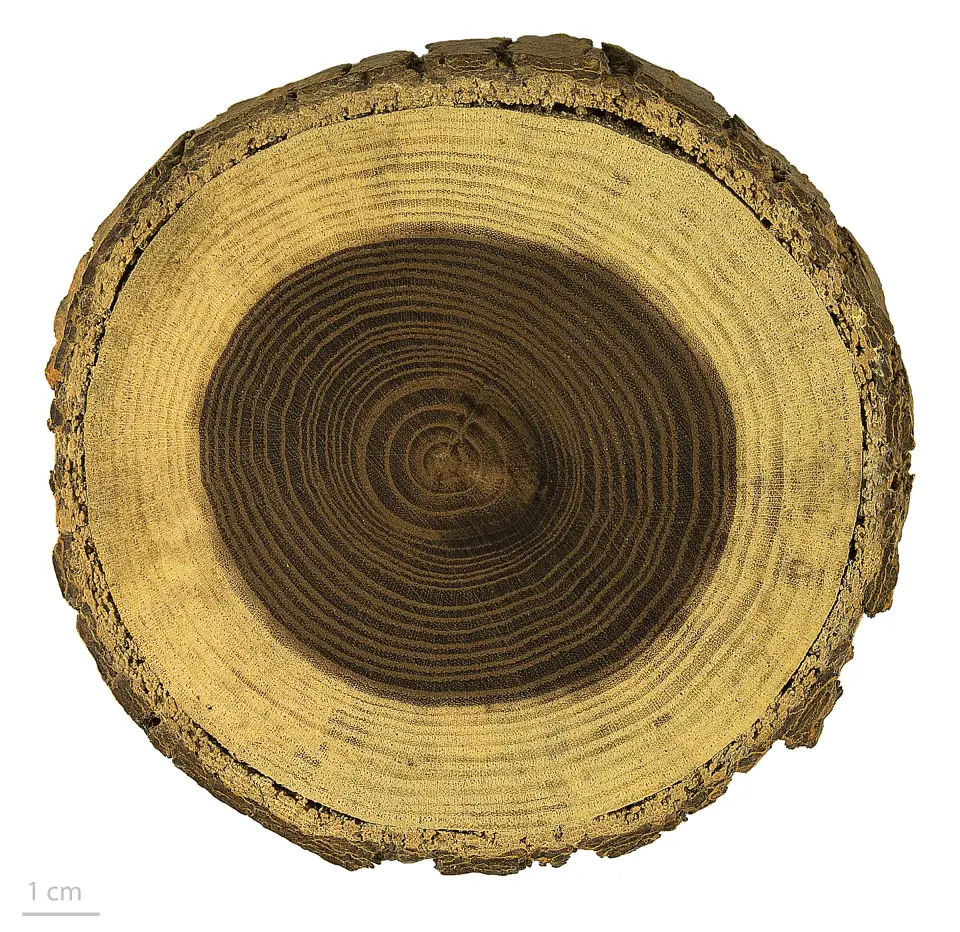
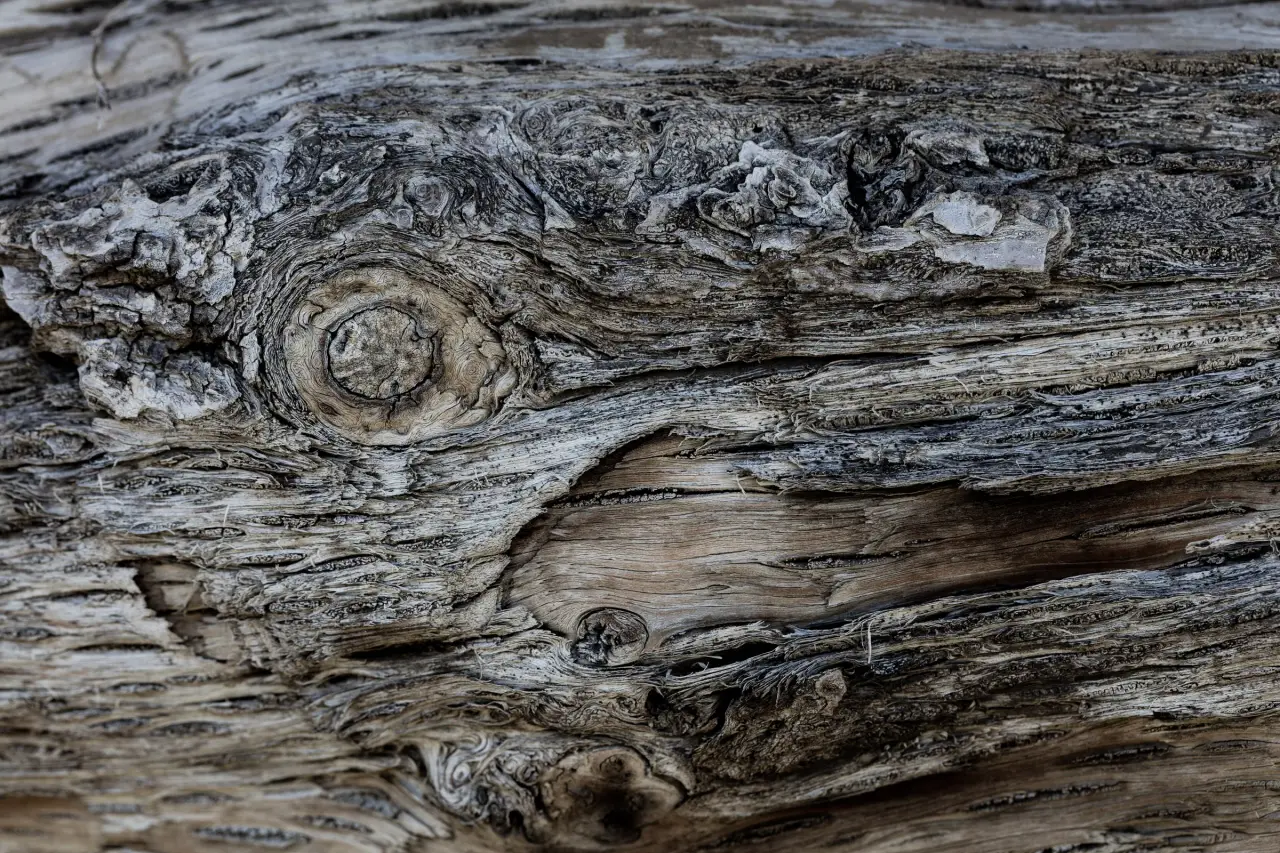
Photo: Roger Culos / Wikimedia Commons, CC BY-SA 3.0 Layer II · Scars
Fire, lightning, deer stripping the bark. The tree grows over its wounds but does not forget: the scars stay in the wood like notes in the margin.
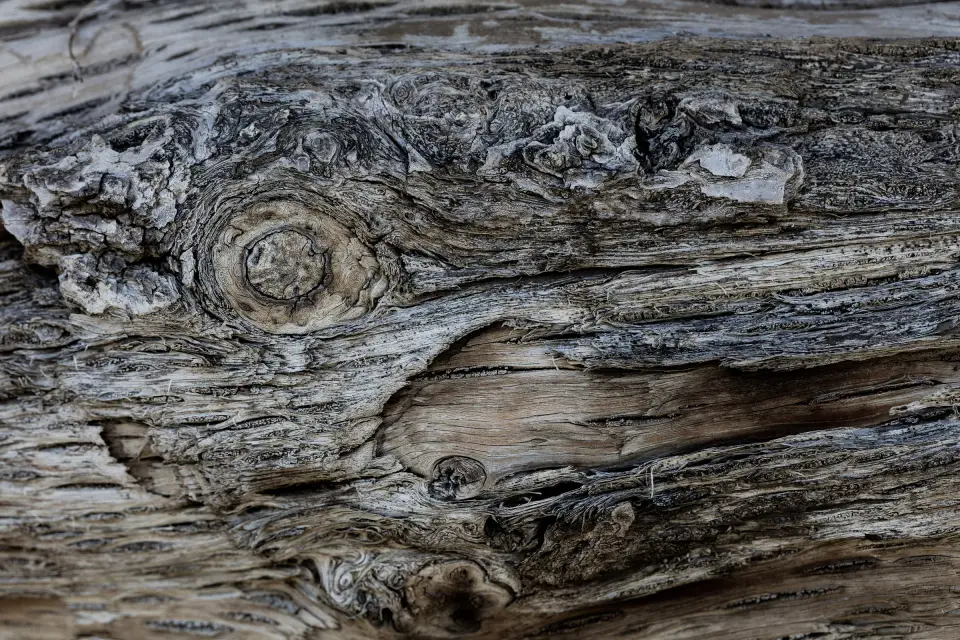
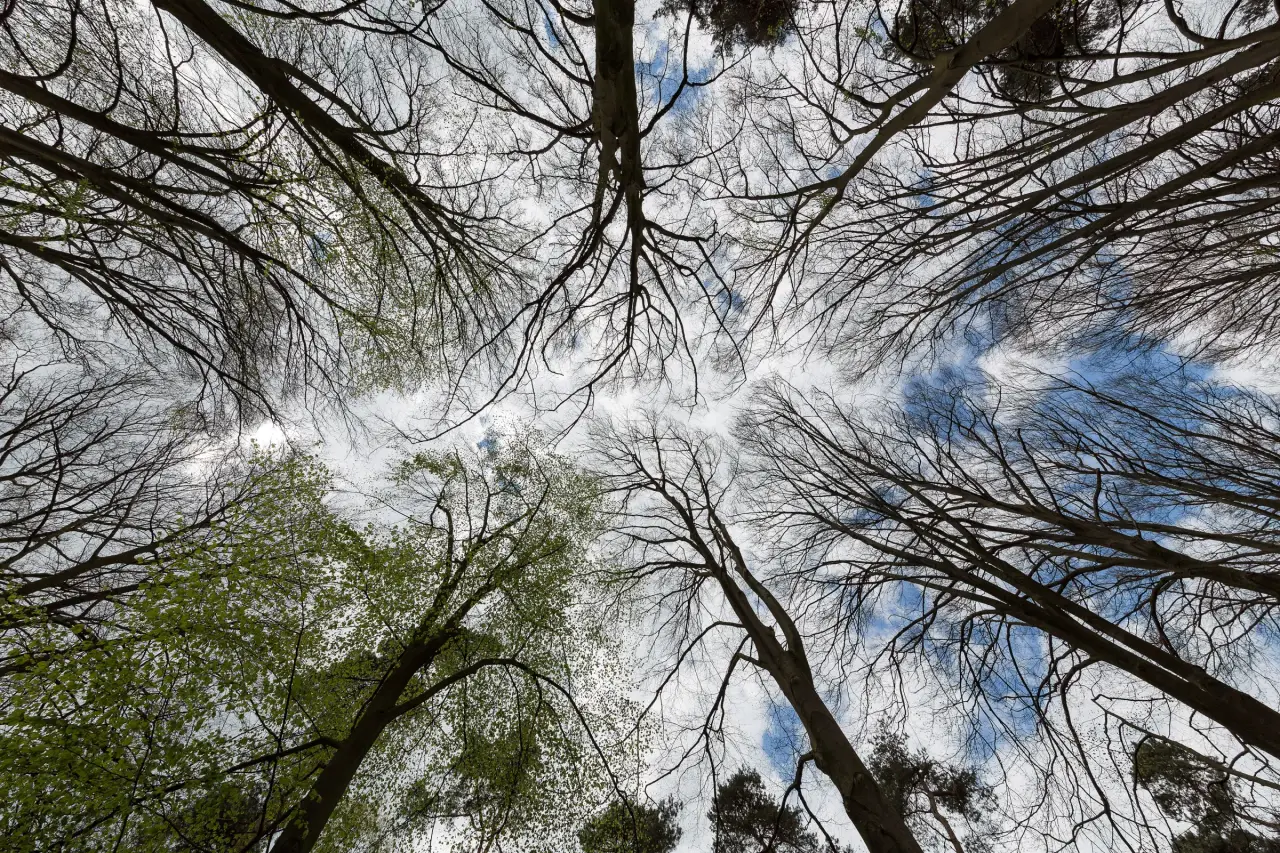
Photo: Tomascastelazo / Wikimedia Commons, CC BY-SA 4.0 Layer III · Crowns
Tree crowns do not touch. That gap, called crown shyness, draws a map of neighbours and of the fight for light across the sky.
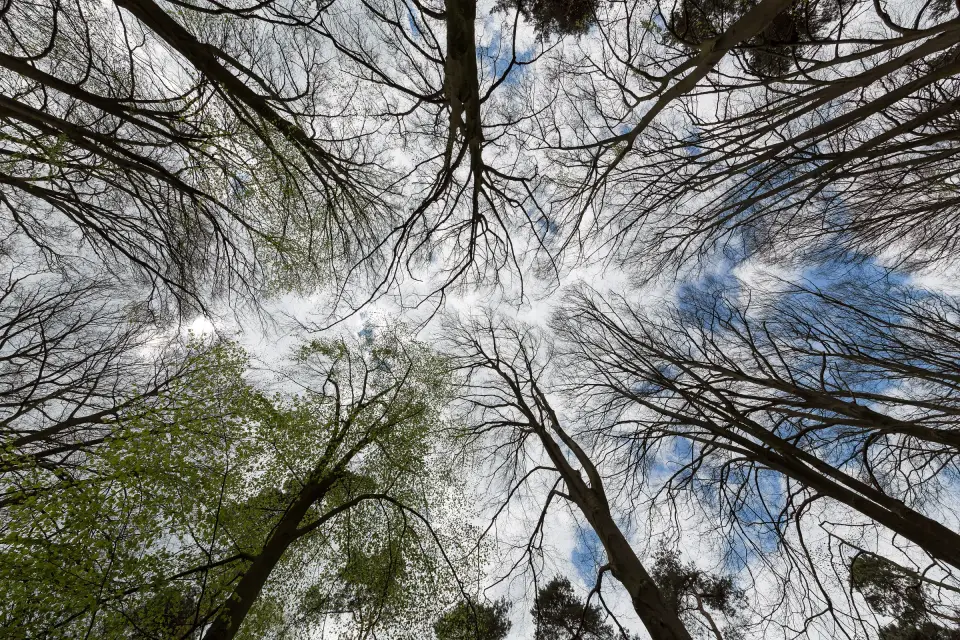
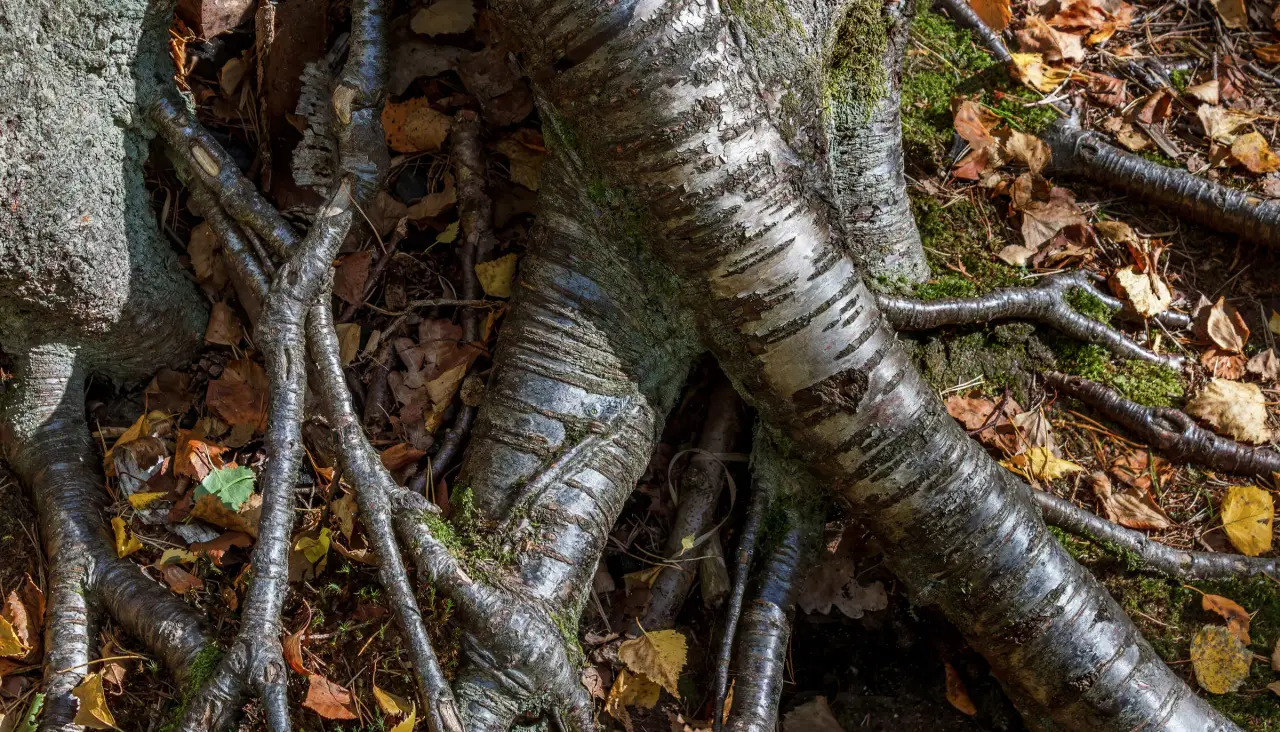
Photo: Dietmar Rabich / Wikimedia Commons, CC BY-SA 4.0 Layer IV · Roots
Underground, trees connect with fungi. A web of hyphae carries water, sugars and signals. It is the least visible part of the forest and the one with the longest memory.
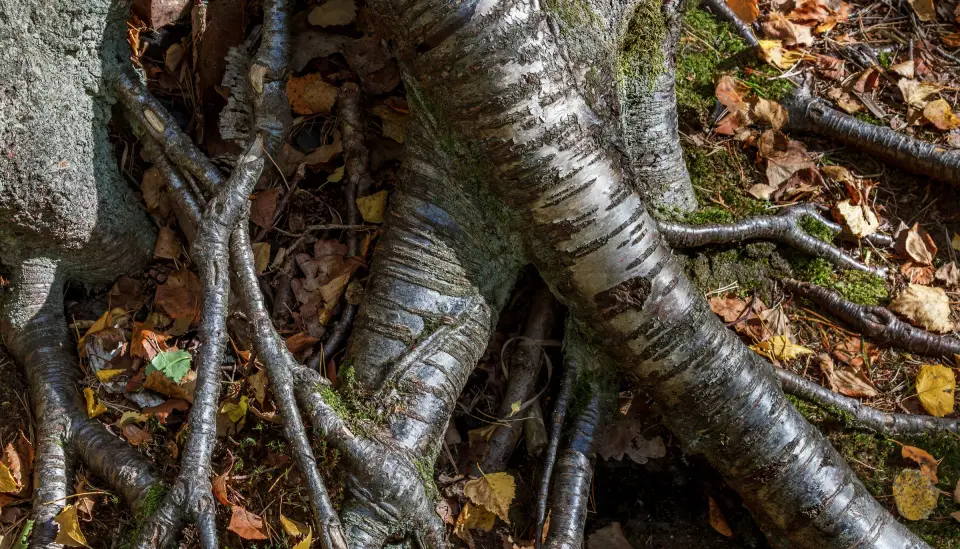
Photo: W.carter / Wikimedia Commons, CC BY 4.0
A chronicle written in mycelium
Beneath the litter the forest lives a second life. The roots of most trees work with mycorrhizal fungi: the fungus supplies water and minerals, the tree gives it sugars in return. A web of hyphae links trunks tens of metres apart. Researchers2 Suzanne Simard’s work in the 1990s showed carbon moving between trees through shared fungi; how far this goes is still debated. still argue about how much of this is cooperation and how much plain trade, but one thing is certain: a forest is more of a community than a collection of trees.
A forest is not a collection of trees. It is a sentence that has been written for centuries and still has no full stop.
That is why felling removes more than trunks. It breaks off a conversation. New saplings will grow, but the fungal web that joined the old trees needs decades to rebuild, and the memory written in the rings disappears with the wood.
How to read a forest
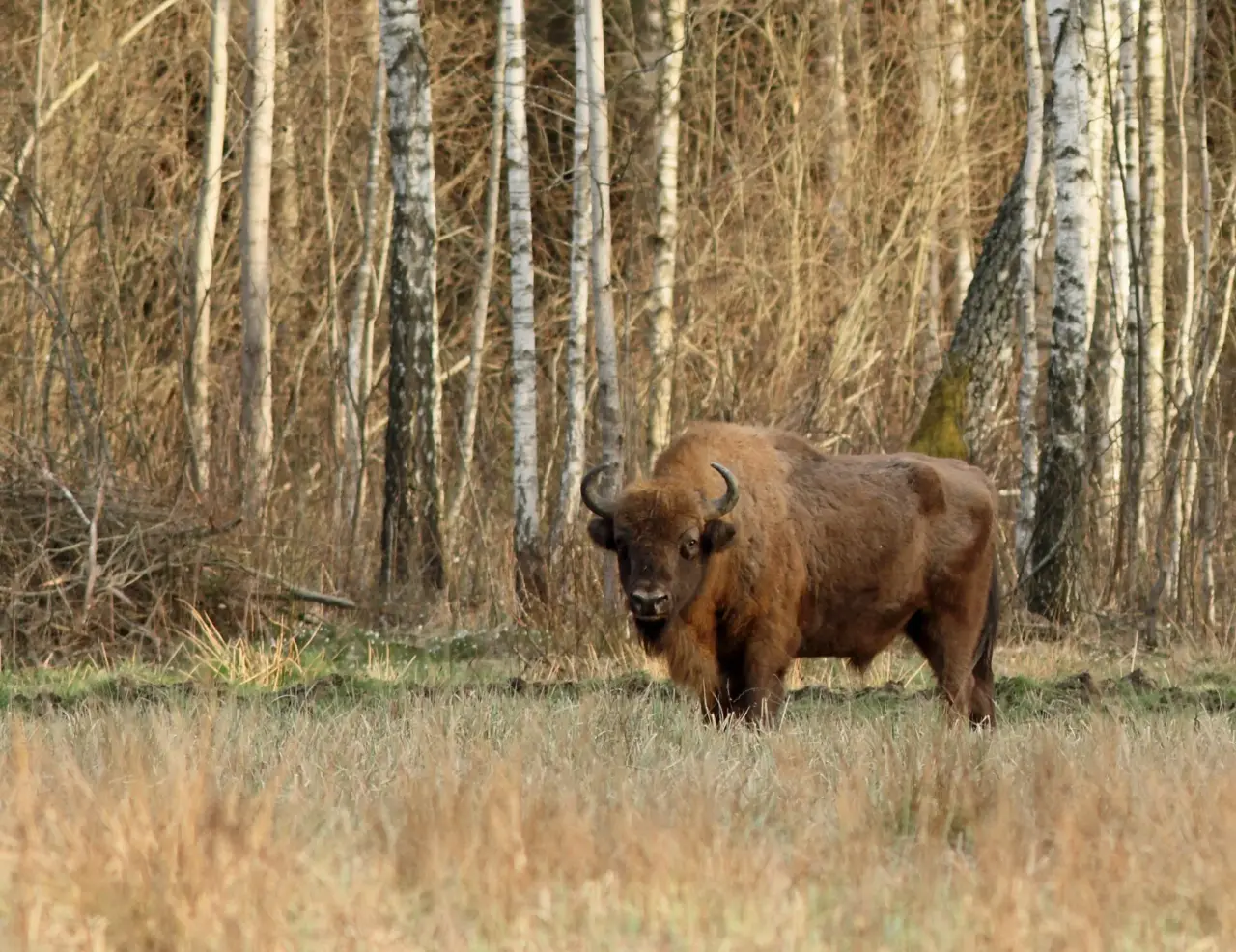
You don’t need a laboratory. A windthrown trunk, the side of an old oak or a piece of bark will do. Count the rings on a fresh cut and find the narrowest one. Look for fire scars, dead branches on the windward side, moss growing where moisture lingers longest.
And then just stand still for a while. The forest speaks slowly, but it never stops.
This piece draws on conversations with foresters and dendrochronologists, whom we thank for their patience.