Seeds in the Freezer
Inside a mountain on Svalbard lie more than a million seed samples. It isn’t a vault for the end of the world, but a backup for its ordinary days.
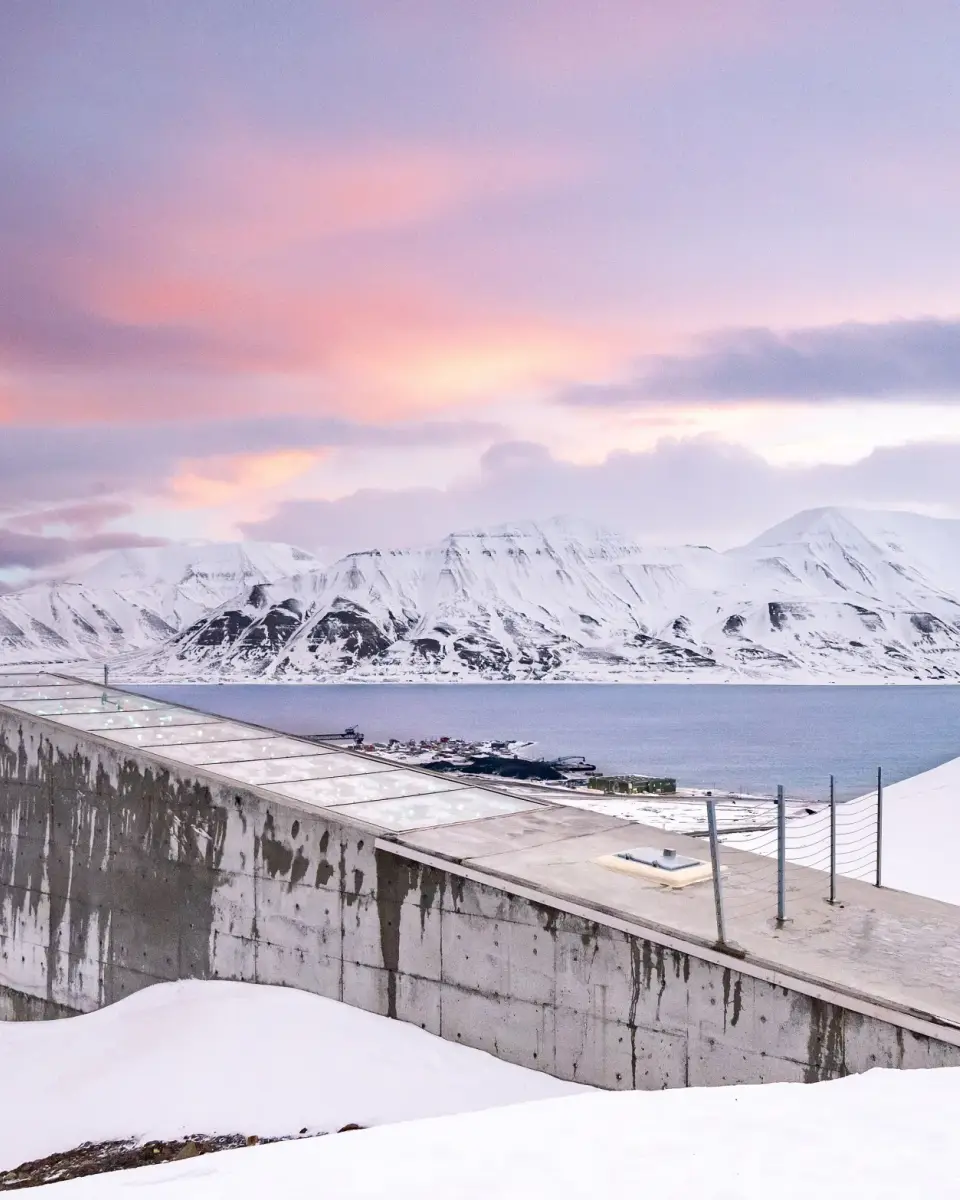
A seed is a letter sent to the future. It contains everything a plant needs to start over, and a store of food for the first few days. It only needs someone to open it at the right moment: with moisture, warmth, light.
For ten thousand years farmers kept these letters in clay jars, sacks and larders, choosing the best grains each year for the next sowing. That is how thousands of varieties came about, each suited to its own valley and microclimate. Most of them disappeared within a single century.
The people who didn’t eat the collection
The story of the Leningrad botanists is so unlikely it sounds like a legend, but it is well documented. They sat among tonnes of food and starved, because they understood it wasn’t food. It was future harvests.

A backup
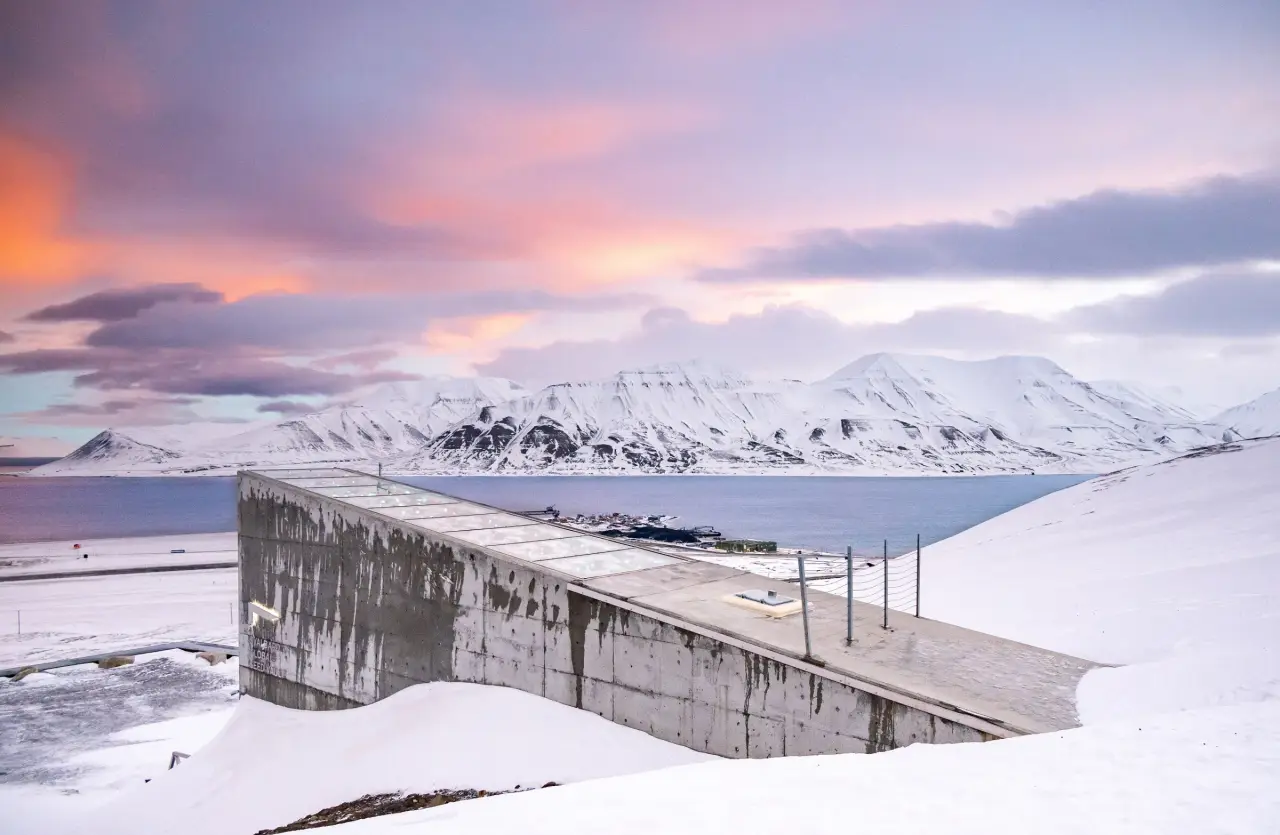
The Svalbard vault is often called the doomsday vault. That is misleading. It isn’t about the apocalypse, but about ordinary disasters: a lab fire, a flood, a war, a power cut, a clerical error. Each country keeps a duplicate of its seeds here, and the originals stay at home. Svalbard doesn’t own them; it only looks after them.
- 4.5 million
- samples the vault can hold
- −18 °C
- the storage temperature
- over 1.3 million
- samples deposited so far
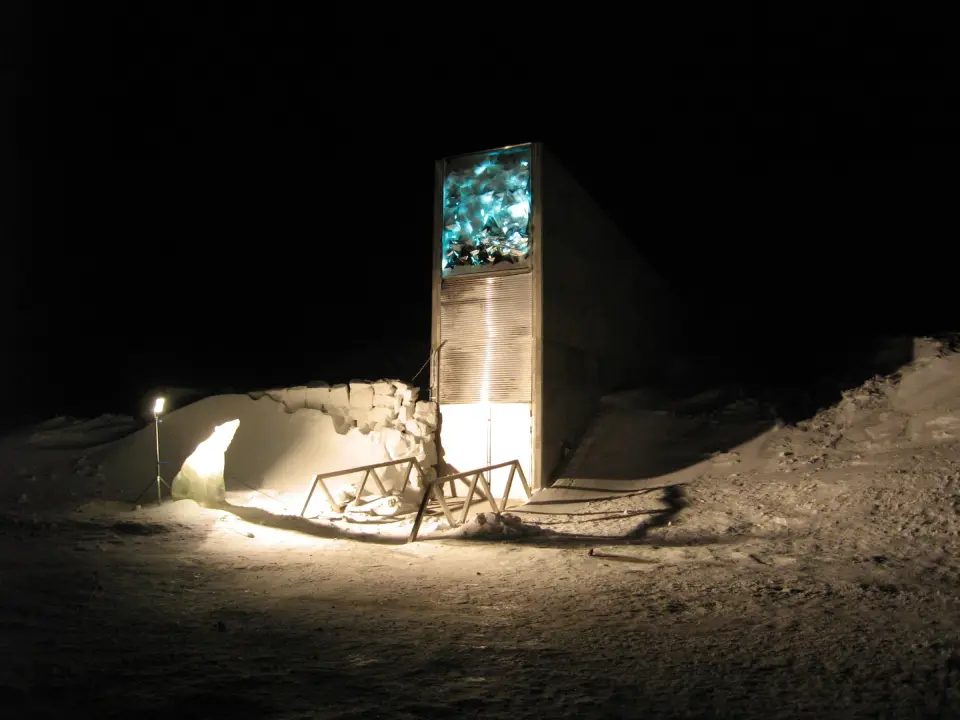

At minus eighteen degrees, the seeds of most crops stay viable for decades, some for centuries. If the cooling ever failed, the permafrost around the vault would still keep it below zero.
A small bank in a drawer
You don’t need a mountain to keep seeds. A paper envelope, a date and a name will do. Save seeds from the vegetables that grew well for you, swap them with your neighbours, sow a few every year. Every drawer of envelopes is a letter to the future, too.