PoemPlants3 min read

Thirteen Ways of Looking at Moss

A sequence of poems about a plant with no roots, no flowers and no hurry.
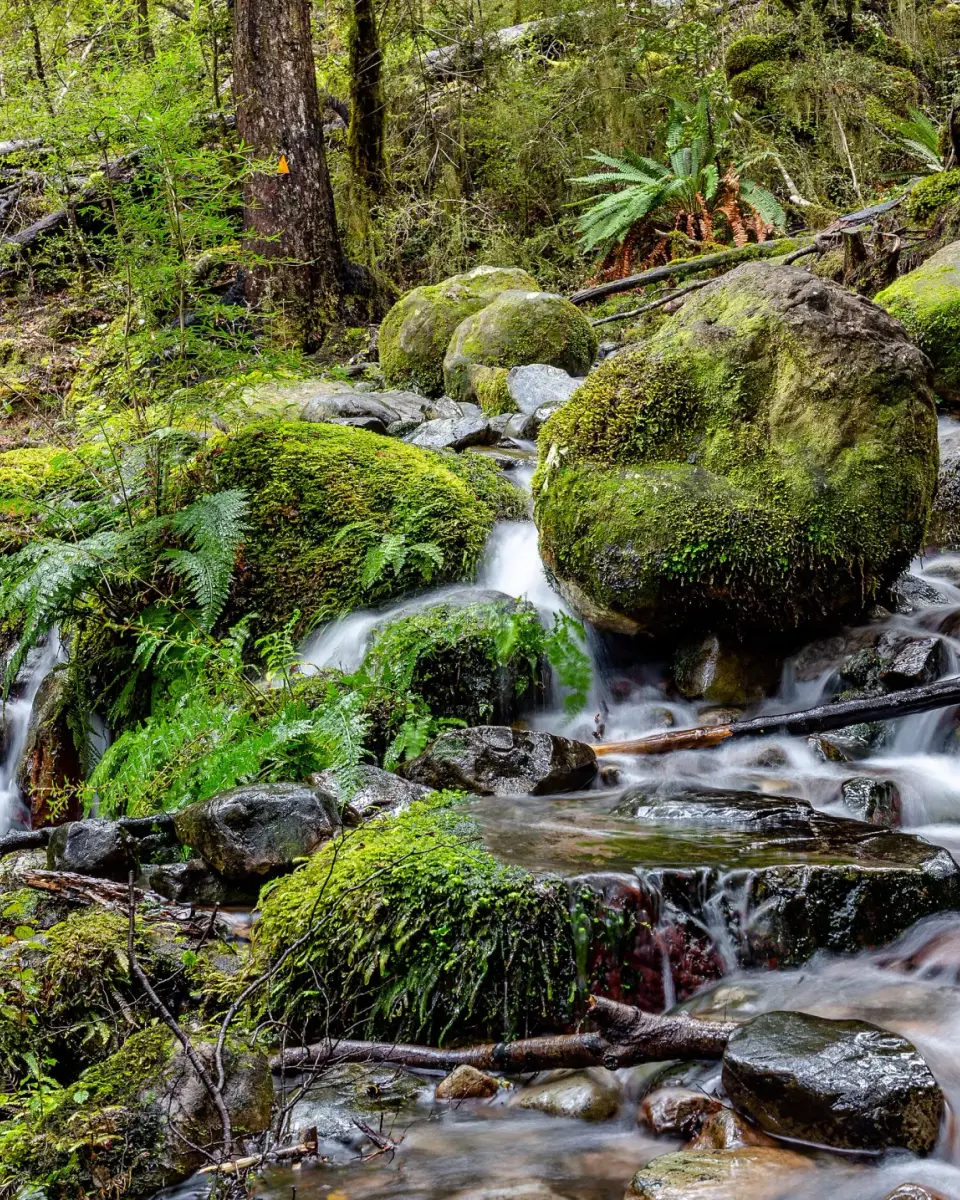
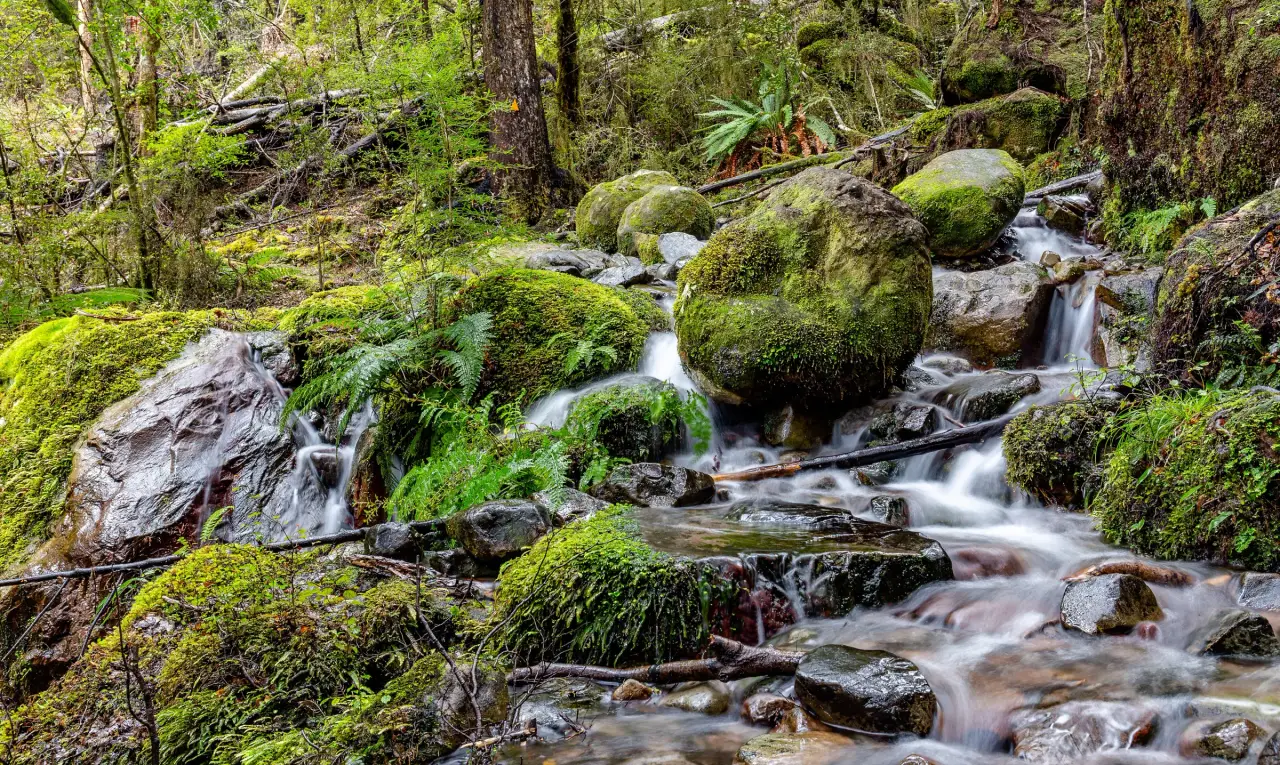
A stream running between moss-covered boulders

With a bow to Wallace Stevens, who looked at a blackbird.
IAmong twenty snowy mountains,the only green thingwas the moss on the north side of a stone.

III was of three minds,like a logon which three kinds of moss are living.

IIIMoss has no roots.It holds on to the worldby moisture alone.

IVA woman and the rainare one.A woman and the rain and the mossare one.

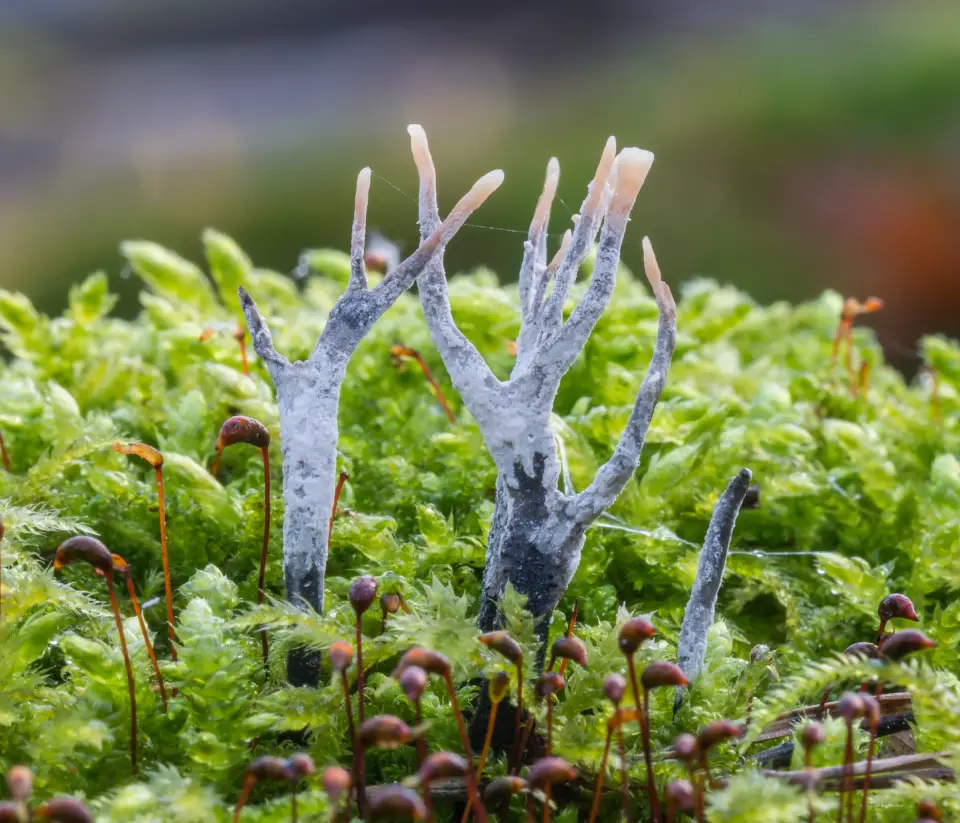
White, branching fruiting bodies of candlesnuff fungus in a cushion of moss
Candlesnuff fungus in a cushion of moss, a few centimetres tall.Photo: Norbert Nagel / Wikimedia Commons, CC BY-SA 3.0

VI do not know which to prefer,the beauty of droughtor the beauty of the first drop,or just after.

VIIcicles filled the long windowwith barbaric glass.On the other side,the moss waited for March.

VIIO thin men of the city,why do you imagine golden birds?Do you not see how the mosswalks the walls around the feet of the women about you?

VIIII know noble accentsand lucid, inescapable rhythms;but I know, too,that the moss is involved in what I know.

A stream running between moss-covered boulders
Photo: Michal Klajban / Wikimedia Commons, CC BY-SA 4.0

Thirteen ways

IXWhen the moss passed out of sight,it marked the edgeof one of many circles.

XAt the sight of mossin a green light,even the bawds of euphonywould cry out sharply.

XIHe rode through the woodsin a glass coach.Once, a fear pierced him,in that he mistookthe shadow of his equipagefor moss.

XIIThe river is moving.The moss must be growing.

XIIIIt was evening all afternoon.It was snowingand it was going to snow.The moss satin the cedar-limbs.

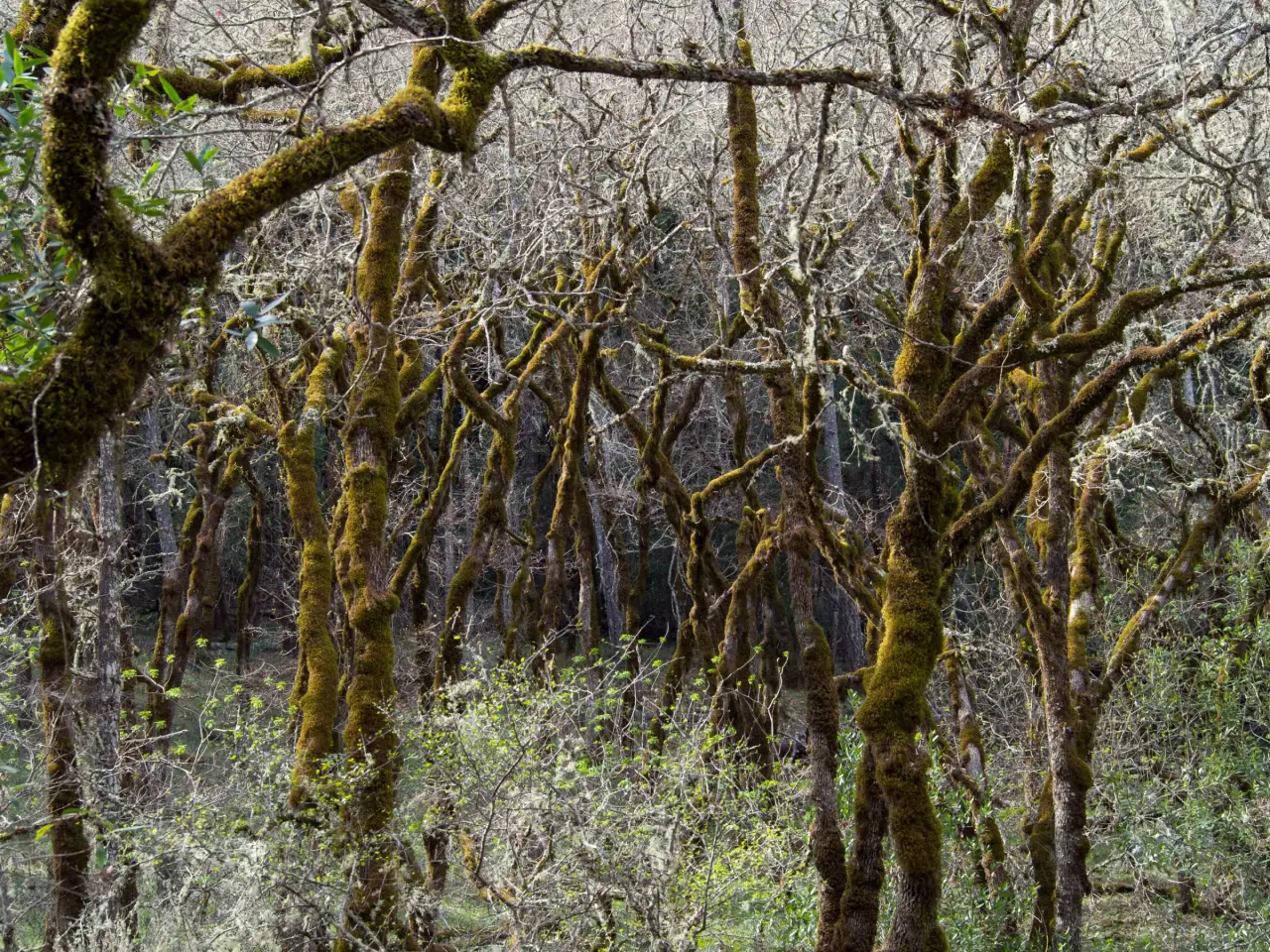
Tree trunks and branches overgrown with green moss
A forest in California where moss covers every branch.Photo: Rhododendrites / Wikimedia Commons, CC BY-SA 4.0

From the author

This sequence is a paraphrase of Wallace Stevens’s 1917 poem in which a blackbird appears in thirteen scenes. I swapped the blackbird for moss because moss is its opposite: it doesn’t fly away, doesn’t sing, doesn’t draw attention to itself. And yet it is everywhere a little water and time come to rest.